How to identify your ideal client before writing your counselling website
Writing your counselling website can feel surprisingly difficult. You know what you do, you know the types of clients you work with, you may even have years of experience and plenty you could say about your approach. But when you sit down to write your homepage, you’re faced with a blank screen and one big question:
What should I actually say?
One of the most useful things you can do before writing your website copy is to get really clear about who you’re speaking to.
Not because you want to exclude potential clients, but because a website becomes much more effective when the right person can quickly recognise themselves in it.
When someone lands on your website and thinks, ‘This sounds like me. She understands what I'm going through,’ you've already taken an important step towards building trust.
Start by defining your ideal client
Your ideal client doesn't need to be a real person, and you don't need to create an elaborate fictional profile.Instead, think about the type of person you most enjoy working with and feel well placed to support.
Consider:
How old might they be?
What are their circumstances?
What are they struggling with?
What might have prompted them to look for counselling now?
What would they like to be different?
What kind of support are they looking for?
What might make them hesitate about contacting a counsellor?
Try describing this person in a few sentences.
For example:
Emma is a 42-year-old professional who appears to have everything under control but often feels overwhelmed and anxious. She's successful in her career but struggles with perfectionism and self-doubt. She's considering therapy because she wants to feel calmer, more confident and better able to cope with life's pressures.
You don't need to use this description on your website. It's there to help you understand who you're writing for.
Put yourself in their shoes
Once you have a picture of your ideal client, try looking at your website from their perspective. An empathy map can be a simple way to do this.
Think about six areas of their experience:
1. What are they hoping to change?
What is ultimately bringing them to counselling?
Perhaps they want to feel less anxious, improve their relationships, understand themselves better, recover from burnout or feel more in control of their life.
Think beyond the problem itself and consider what they hope life will feel like after getting support.
2. What have they already tried?
Most people don't arrive at counselling as their first response to a difficulty.
They may have read books, listened to podcasts, spoken to friends, tried self-help techniques or had previous therapy.
Understanding what they've already tried can help you acknowledge their experience and explain how your approach may be different.
3. What do they need to know?
At the point they're looking for a counsellor, they may have lots of questions.
They might want to know:
Is counselling right for me?
Will this counsellor understand me?
What actually happens in sessions?
How long will it take?
Can they help with what I'm experiencing?
What if I find it difficult to talk about?
What if I've had therapy before and it didn't help?
Your website should answer some of these questions and reduce the uncertainty around getting in touch.
4. Think about how they're feeling
This is particularly important for counselling websites.
Someone looking for therapy may already feel anxious, overwhelmed, stuck or uncertain. They may also feel embarrassed about asking for help or worry that they won't be understood.
Your website doesn't need to solve these feelings, but it should show that you understand them.
Instead of simply listing the conditions you work with, consider describing the experiences behind them.
For example, rather than:
Anxiety, depression and low self-esteem
you might say:
You may be struggling with constant worry, feeling overwhelmed by everyday life or finding it difficult to believe in yourself.
The second version gives your potential client a much greater opportunity to recognise themselves.
5. What influences their decision?
Think about how your ideal client is likely to choose a counsellor.
They may have been referred by a GP or another professional. They might have found you through Google, social media or a directory. Perhaps a friend recommended you, or they've been reading about their experiences online.
Whatever brought them to you, they'll probably compare several counsellors before deciding who to contact.
Your website needs to give them enough information to answer:
‘Could this be the right person for me?’
Your tone, photography, qualifications, approach, specialisms and the way you describe your work all contribute to that decision.
6. What might stop them getting in touch?
Finally, think about their concerns or objections.
Perhaps they're worried about the cost. Maybe they're nervous about opening up to a stranger. They may be unsure whether their problems are ‘serious enough’ for therapy, or they might have had a difficult experience with counselling in the past.
You don't need to address every possible concern on your homepage, but understanding these barriers helps you create content that feels reassuring rather than sales-focused.
For example, explaining what happens during an initial session can make the process feel much less daunting.
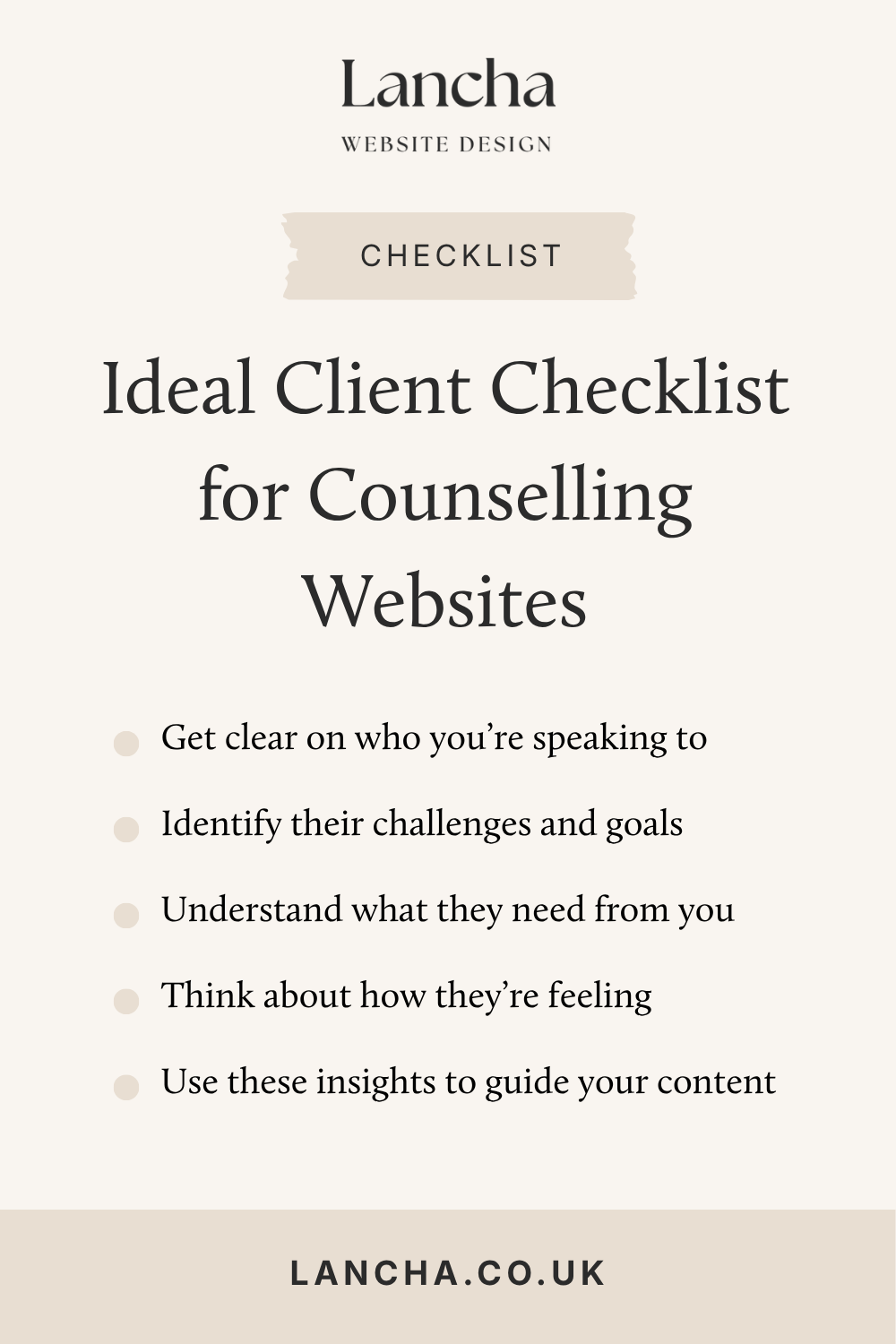
Use this insight when writing your website
Once you've done this work, your website copy becomes much easier to write.
Instead of starting with:
“I am a qualified counsellor offering...”
you can start by thinking:
“What does the person visiting this page need to hear right now?”
That might mean talking about the problem they're experiencing, the change they're hoping for, how you work and what they can expect from the process.
Your qualifications and experience still matter, of course. But they should sit alongside the information your potential client actually needs to make a decision.
Your ideal client is a starting point
It's worth remembering that defining an ideal client doesn't mean you can only work with people who fit your description perfectly.
People are complicated, and your real clients will never fit neatly into a fictional profile.
The purpose of identifying your ideal client is simply to give you a clear person to have in mind when you're writing.
When your website tries to speak to everyone, it can end up speaking to no one particularly well.
But when the right visitor reads your words and thinks, ‘She gets it,’ your website starts doing something much more valuable than simply describing your services - it starts building a connection.
Before you start writing
Before opening your website editor or writing your homepage, take a few minutes to answer:
Who is my ideal client?
What are they struggling with right now?
What are they hoping will change?
What have they already tried?
What do they need to know about working with me?
How might they be feeling?
What might stop them from getting in touch?
What would make them feel understood and reassured?
You don't need to have perfect answers. But the clearer you are about who you're speaking to, the easier it becomes to write a counselling website that feels relevant, reassuring and genuinely human.
If you’re ready to start writing your website but aren’t sure what to say or how to approach your content, my Website Content Planning Guide for Therapists can help. It includes practical hints, tips and prompts to help you write clear, engaging website content, along with a couple of exercises to help you think about your ideal client and what they need from your website.